

Textured knit fabrics occupy a distinctive position in fashion textile design, offering visual depth, tactile interest, and aesthetic character that flat knits cannot achieve. Among textured constructions, bouclé and fleece tweed represent two of the most recognized and widely used techniques — each with unique production processes, visual characteristics, and application profiles. For designers and sourcing professionals, understanding the technical differences between these constructions is essential for making informed fabric selection decisions.
Bouclé Fabric Construction
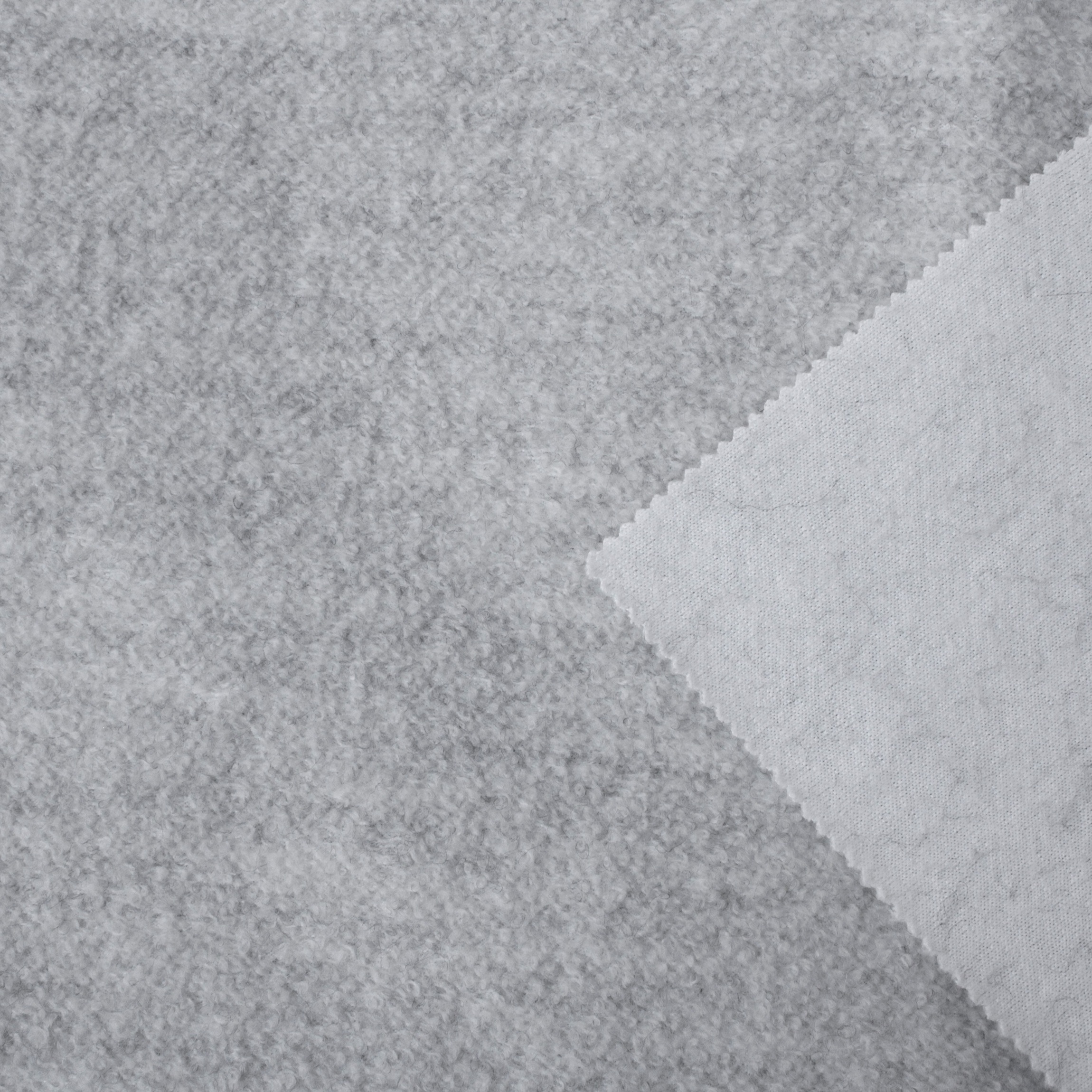
Understanding bouclé structure. Bouclé (from the French word meaning "curled" or "looped") is characterized by loops of yarn that protrude from the fabric surface, creating a nubby, textured appearance. These loops can vary in size, density, and regularity depending on the desired aesthetic effect and production parameters.
Loop formation process. Bouclé loops are created during the knitting process through specialized machine settings and yarn feed techniques. The knitting machine forms loops by controlling yarn tension and needle movement to create intentional slack in specific stitches. These slack stitches are then stabilized by subsequent knitting rows, creating permanent loops that stand away from the fabric surface.
The loop formation process requires precise control of several parameters:
- Yarn tension: Lower tension on loop-forming yarns creates larger, more pronounced loops
- Needle timing: Specific needle selection patterns determine loop placement and density
- Feed rate: Controlled overfeeding of yarn creates the excess length needed for loops
- Stabilization: Subsequent knitting rows lock loops in place to prevent unraveling
Yarn selection for bouclé. Bouclé construction works with various yarn types, each producing different aesthetic effects:
- Wool yarns: Traditional choice providing softness, warmth, and natural texture; wool's crimp enhances loop definition
- Wool-polyester blends: Improved durability and shape retention while maintaining wool's aesthetic qualities
- Alpaca and mohair blends: Luxury fibers add halo effect and distinctive surface character; loops become softer and more diffuse
- Cotton and cotton blends: Lighter weight bouclé for spring/summer applications; loops are crisper and more defined
- Fancy yarns: Slub, spiral, and other textured yarns create complex surface effects when used in bouclé construction
- The Shanglin textured wool knit fabric guide includes yarn recommendations for different bouclé applications, balancing aesthetic goals with performance requirements and cost considerations.
Machine requirements for bouclé production. Bouclé construction requires knitting machines with specific capabilities:
- Electronic jacquard systems: Enable precise control of loop placement and pattern formation
- Adjustable tension controls: Allow fine-tuning of loop size and density
- Multiple yarn feed positions: Accommodate different yarns for ground fabric and loop formation
- Specialized needles: Certain needle types facilitate loop formation and stabilization
- Pattern programming: Computerized systems store and execute complex bouclé patterns
Production considerations. Bouclé construction presents specific production challenges:
- Slower production speeds: Loop formation requires careful control, reducing machine speed compared to flat knits
- Higher yarn consumption: Loops require additional yarn length, increasing material costs
- Quality control complexity: Loop consistency must be monitored throughout production
- Finishing sensitivity: Brushing and washing processes must preserve loop integrity
- Snagging risk: Loops can catch on rough surfaces during handling and garment construction
The bouclé loop fleece tweed production techniques employed at Shanglin address these challenges through specialized equipment, trained operators, and rigorous quality control procedures.
Fleece Tweed Construction
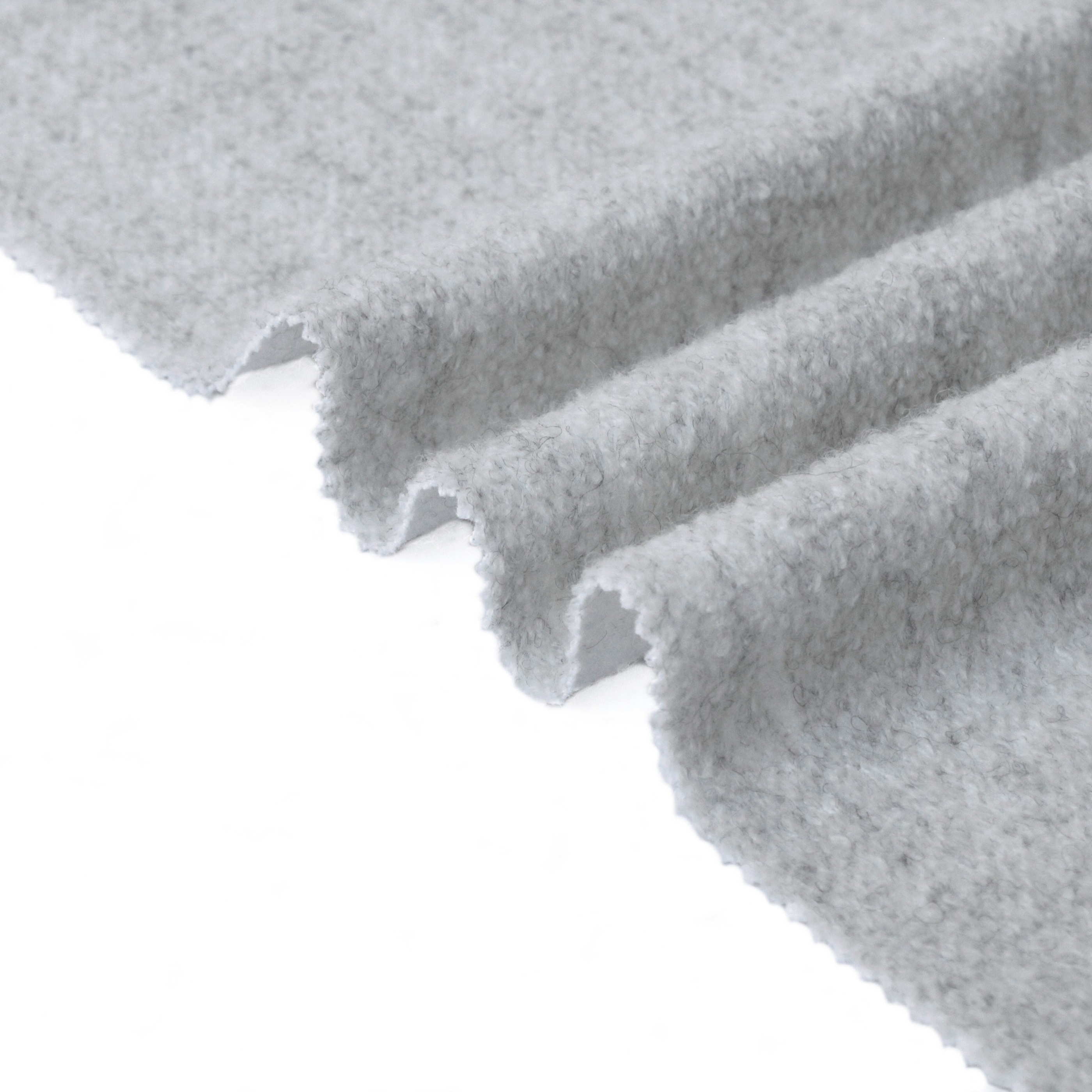
Understanding fleece tweed structure. Fleece tweed combines two textile concepts: fleece construction (a soft, napped surface created by brushing) and tweed aesthetics (the characteristic mottled, multi-colored appearance associated with traditional woven tweeds). The result is a knit fabric with a soft, textured surface that evokes the look of woven tweed while maintaining knit fabric comfort and stretch.
Base fabric construction. Fleece tweed begins with a standard knit construction — typically a jersey or interlock knit using multiple yarn colors. The base fabric is knitted with deliberate color variation, using heather yarns, marl yarns, or multiple colored yarns fed in sequence to create the mottled tweed effect. This color variation is fundamental to achieving the tweed aesthetic.
Brushing and napping process. The fleece surface is created through mechanical brushing:
- Brushing machines: Fabric passes through rotating cylinders covered with fine wires or bristles
- Fiber raising: Brushes lift and tease fiber ends from the yarn structure, creating a fuzzy surface
- Multiple passes: Fabric may pass through brushing machines several times to achieve desired pile density
- Directional brushing: Brushes can work in specific directions to create uniform or textured surface effects
- Speed and pressure control: Brushing intensity is carefully controlled to avoid damaging the base fabric
The brushing process transforms a smooth knit surface into a soft, fleece-like texture while revealing the multi-colored yarn structure that creates the tweed appearance.
Shearing and surface finishing. After brushing, fleece tweed undergoes shearing to control pile height and create a uniform surface:
- Shearing machines: Rotating blades trim raised fibers to consistent height
- Height adjustment: Shearing height determines final pile density and fabric weight
- Multiple shearing passes: Gradual reduction of pile height for precise control
- Surface inspection: Sheared surface is examined for uniformity and defects
- Final brushing: Light brushing after shearing softens the cut fiber ends
The shearing process is critical for achieving the desired hand feel and appearance — too much pile creates a shaggy, unkempt look, while too little reduces the soft, fleece-like character.
Fiber composition for fleece tweed. Fleece tweed works effectively with various fiber blends:
- Wool-polyester blends: Most common choice; wool provides warmth and natural feel, polyester adds durability and shape retention
- 100% wool: Premium option with excellent warmth and natural aesthetics; requires careful brushing to avoid excessive fiber loss
- Wool-acrylic blends: Cost-effective alternative with good brushing response and color retention
- Wool-cotton blends: Lighter weight fleece tweed for transitional seasons; cotton adds breathability
- Alpaca and mohair blends: Luxury fleece tweed with enhanced softness and distinctive surface character
Production considerations. Fleece tweed production presents specific requirements:
- Yarn selection: Fibers must respond well to brushing without excessive breakage or pilling
- Brushing expertise: Operators must balance pile density with fabric integrity
- Color consistency: Multi-colored effects must be consistent across production runs
- Weight control: Brushing and shearing affect final fabric weight; precise control is required
- Pilling management: Brushed surfaces are prone to pilling; fiber selection and finishing treatments minimize this issue
The Shanglin textured wool knit fabric guide addresses these production considerations through established processes and quality standards developed over years of fleece tweed production experience.
Technical Comparison: Bouclé vs Fleece Tweed
Visual characteristics.
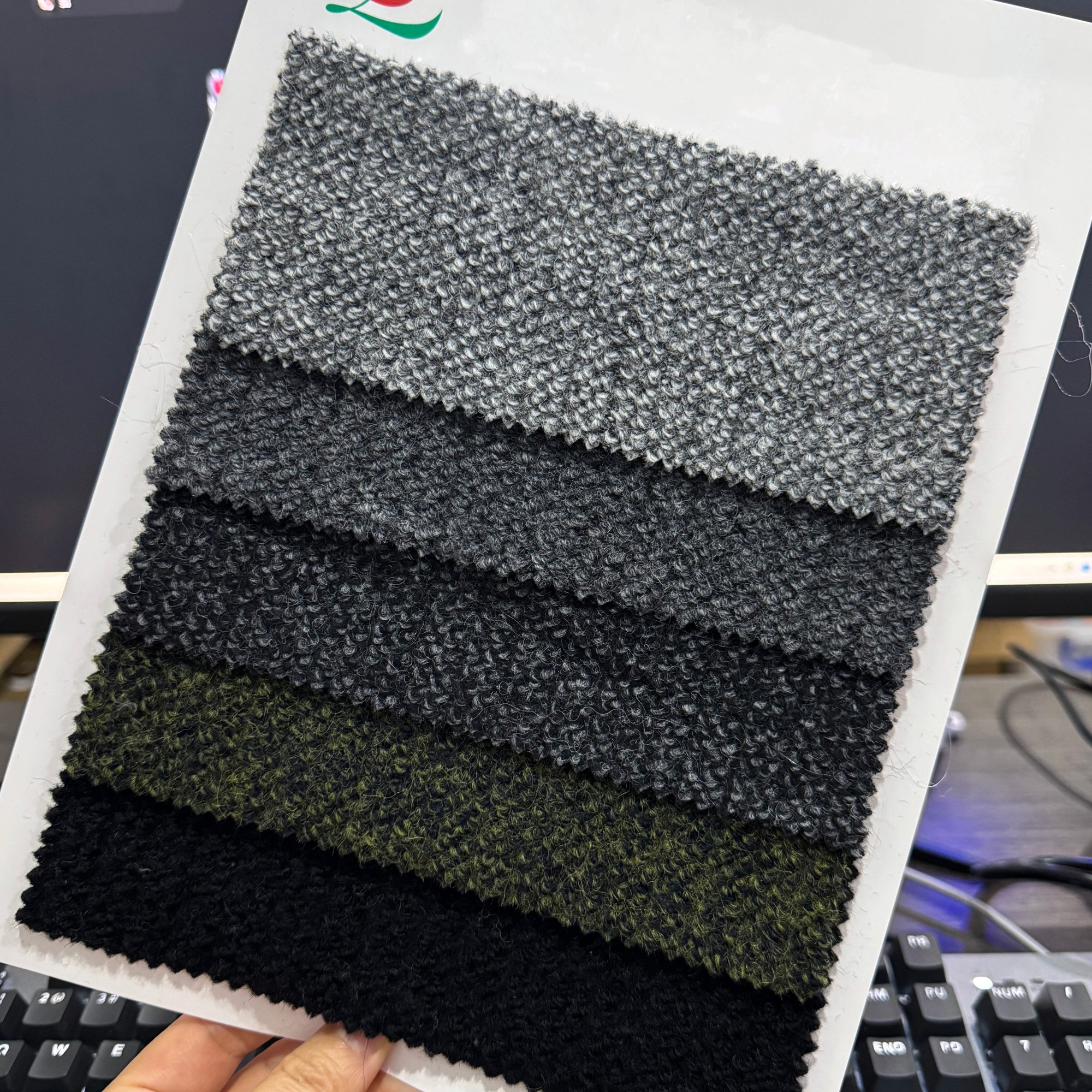
- Bouclé: Distinctive loops protruding from surface; nubby, three-dimensional texture; loops can be regular or irregular; surface has depth and shadow play
- Fleece tweed: Soft, napped surface with mottled color effect; surface is relatively flat but textured; tweed-like appearance with knit comfort
Tactile qualities.
- Bouclé: Textured, bumpy surface; loops can feel springy or soft depending on yarn; three-dimensional texture is physically perceptible
- Fleece tweed: Soft, fuzzy surface; smooth to the touch with slight pile; comfortable against skin
Production complexity.
- Bouclé: Higher complexity due to loop formation requirements; specialized machine settings and pattern programming; slower production speeds
- Fleece tweed: Moderate complexity; standard knitting followed by mechanical finishing processes; faster production than bouclé
Cost considerations.
- Bouclé: Higher production costs due to slower speeds, higher yarn consumption, and specialized equipment; premium pricing reflects production complexity
- Fleece tweed: Moderate production costs; standard knitting with additional finishing steps; more accessible pricing than bouclé
Durability and wear characteristics.
- Bouclé: Loops can snag on rough surfaces; requires careful handling and wear; loop integrity must be maintained through care and use
- Fleece tweed: More durable surface; less prone to snagging; pilling can occur with friction but is manageable with proper fiber selection
Quality Control Considerations
Bouclé quality parameters.
- Loop consistency: Loops should be uniform in size and density across fabric width and length
- Loop security: Loops must be properly stabilized and not pull out easily
- Pattern accuracy: For patterned bouclé, design elements must be correctly formed and aligned
- Yarn defects: Slubs, thick/thin places, and color variations are more visible in bouclé and must be controlled
- Surface uniformity: Loop distribution should be even without bare patches or excessive clustering
Fleece tweed quality parameters.
- Pile uniformity: Brushed surface should be consistent in density and height
- Color effect: Tweed mottling should be evenly distributed and match approved standards
- Pilling resistance: Brushed surface must be tested for pilling tendency and treated if necessary
- Base fabric integrity: Brushing process should not weaken or damage the underlying knit structure
- Weight consistency: Final fabric weight must be within specification after brushing and shearing
Jiangyin Shanglin bouclé fleece tweed construction quality control procedures address these parameters through systematic inspection and testing at multiple production stages, ensuring fabrics meet specifications before shipment.
Applications and Market Use
Fashion applications for bouclé.
- Outerwear: Coats, jackets, and capes where textured surface adds visual interest
- Suits and blazers: Bouclé suiting fabric for distinctive, fashion-forward tailoring
- Skirts and dresses: Textured skirts and dresses for statement pieces
- Accessories: Bags, hats, and decorative elements
- Home textiles: Upholstery, cushions, and decorative throws
Fashion applications for fleece tweed.
- Casual outerwear: Jackets, cardigans, and vests for everyday wear
- Dresses and skirts: Comfortable, warm garments with tweed aesthetics
- Trousers and shorts: Casual bottoms with soft hand feel and visual interest
- Accessories: Scarves, hats, and bags
- Menswear: Sport coats, casual jackets, and vests
Seasonal considerations.
- Bouclé: Primarily autumn/winter fabric due to texture and typical weight ranges; lighter weight bouclé can work for spring
- Fleece tweed: Versatile across autumn, winter, and spring; weight can be adjusted for different seasons
Market positioning.
- Bouclé: Often positioned as premium or luxury fabric due to production complexity and distinctive appearance; commands higher price points
- Fleece tweed: Positioned as versatile, comfortable fabric with broad market appeal; accessible pricing for wider market segments
The Shanglin textured wool knit fabric guide provides application recommendations and market insights to help brands position these fabrics effectively in their product lines.