

In the textile manufacturing industry, longevity is one of the most reliable indicators of operational competence. Trends change, fiber prices fluctuate, and global trade dynamics shift — but a factory that has operated continuously and profitably for nearly twenty years has demonstrably adapted to every market cycle while maintaining the core technical capabilities that keep clients coming back. The Jiangyin Shanglin Textile wool fabric history is precisely this kind of narrative: a story of focused specialization, strategic equipment investment, and gradual expansion from a local knitting operation into a globally connected textile supplier serving fashion brands and independent designers across multiple continents.
Established in 2006 in Changjing Town, Wuxi, Jiangsu Province, Shanglin Textile began as a specialized knitting factory focused on wool and wool-blend fabrics for the domestic Chinese apparel market. Over the subsequent two decades, the company has evolved its product range, upgraded its machinery, expanded its export capabilities, and built a reputation that now attracts international buyers seeking reliable, high-quality wool textiles. This article traces the key phases of that evolution, examining how Shanglin Textile two decades knitting expertise was built layer by layer through deliberate strategic choices.
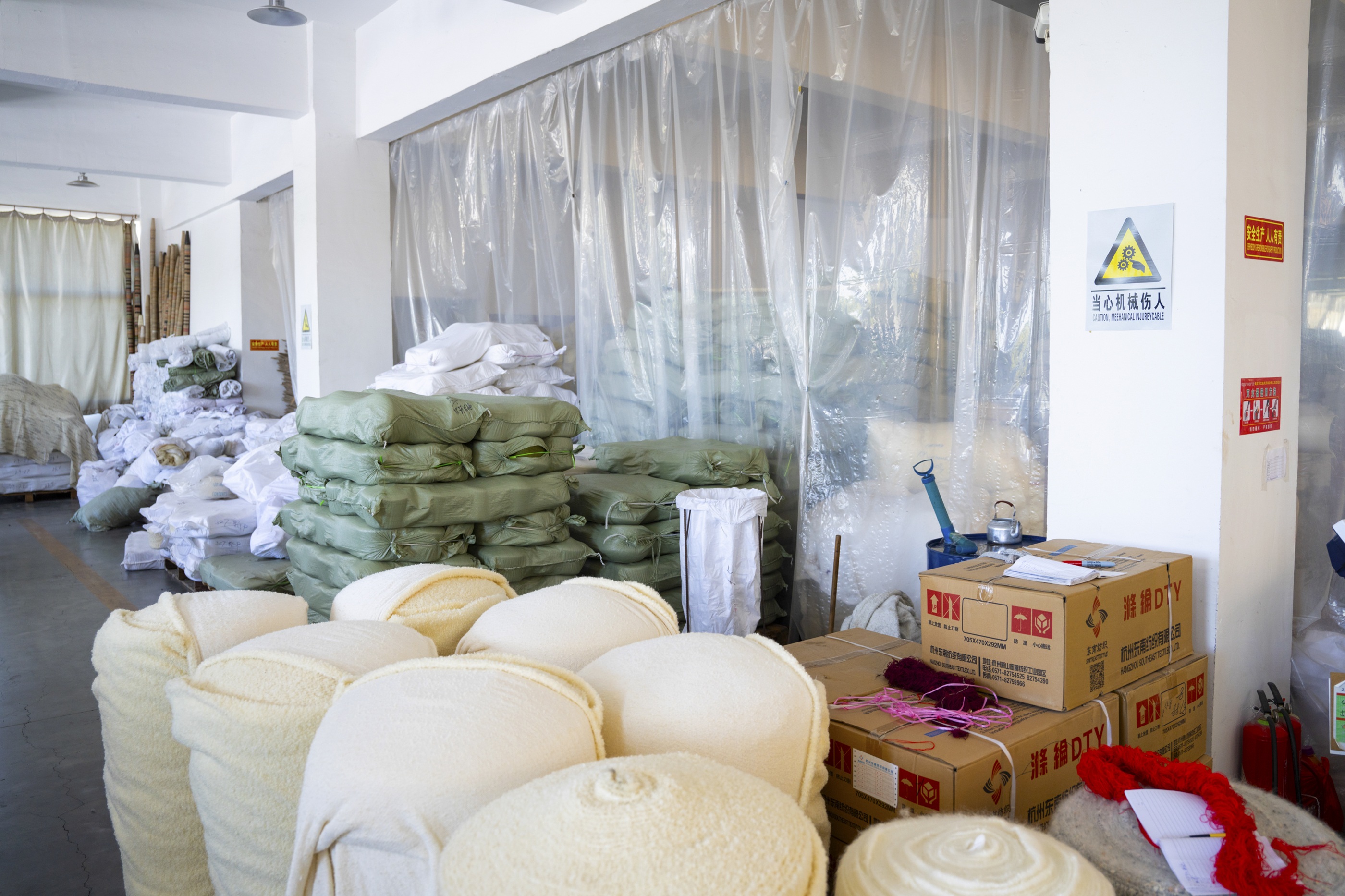
The Foundation Years: 2006-2010
The story of Jiangyin Shanglin Textile wool fabric history begins in 2006, when the company was founded with a clear specialization: knit fabrics based on wool and wool-blend yarns. At that time, China's textile export industry was experiencing rapid growth following the country's accession to the World Trade Organization in 2001, and the elimination of textile quotas under the Multi-Fibre Arrangement had opened global markets to Chinese manufacturers.
The early years were characterized by building foundational capability. The factory started with a modest number of circular knitting machines, producing basic wool and wool-polyester jersey fabrics for domestic garment manufacturers. These first machines were straightforward, single-jersey circular knitters that produced reliable but relatively simple fabric structures. The focus during this period was on mastering the fundamentals: consistent yarn tension, defect-free knitting, accurate GSM control, and reliable delivery to local clients.
By 2010, the factory had established a stable client base in the domestic market and had accumulated the operational experience and financial resources necessary to begin planning its next phase of growth. The Shanglin Textile two decades knitting expertise was taking root during these formative years, as operators and engineers developed deep familiarity with wool fiber behavior during the knitting process — knowledge that would prove invaluable as the company expanded into more complex fabric constructions.
The Technology Expansion: 2011-2015
The period from 2011 to 2015 marked a significant inflection point in the Jiangyin Shanglin Textile wool fabric history. Having mastered basic circular knitting, the company invested in advanced machinery that expanded its product capabilities into textured and patterned fabrics — the category that would eventually become its market differentiator.
The most consequential investment during this period was in computerized jacquard knitting machines. Unlike basic circular knitters that produce uniform stitch patterns, jacquard machines can independently control each needle, creating complex surface textures including bouclé loops, tweed patterns, cable knits, and custom designer motifs. This capability transformed Shanglin from a producer of commodity jersey fabrics into a manufacturer of high-value textured textiles that commanded premium pricing and attracted fashion-conscious clients.
Simultaneously, the factory expanded its range of circular knitting machines to include both small-diameter and large-diameter variants. Small-diameter machines enabled production of fine-gauge fabrics for lightweight applications, while large-diameter machines provided the throughput capacity for high-volume fleece and terry constructions. This equipment diversification meant the factory could now serve a wider range of garment applications — from summer-weight jersey tops to heavyweight winter coat fabrics — without outsourcing any production step.
During this period, Shanglin also began developing its first blended fabrics incorporating luxury fibers. The introduction of mohair-wool blends and early alpaca-wool experiments represented the company's first steps beyond conventional wool and wool-polyester formulations. These initial luxury blends were produced in small quantities for niche domestic clients, but they established the technical foundation for what would become a major product category in later years.
The Export Acceleration: 2016-2020
The years 2016 through 2020 represent the period when Shanglin Textile growth milestones global brands became a defining characteristic of the company's development strategy. Having built a strong technical foundation and a diverse product range, the company made a deliberate push into direct export markets, reducing its reliance on domestic intermediaries and building direct relationships with overseas apparel brands.
This export acceleration required investments beyond production equipment. Shanglin developed English-language communication capabilities, established international trade processes (FOB, EXW, CIF terms, L/C and T/T payment handling), and adapted its product development cycle to align with the seasonal calendar of Western fashion brands — which typically requires fabric sampling 6-9 months before the retail season.
The product range expanded significantly during this period. The alpaca-wool blend category matured from experimental small batches into a full product line with multiple GSM options, colorways, and surface textures. The bouclé and fleece tweed categories — enabled by the jacquard machine investments of the previous period — became the company's signature products, differentiating Shanglin from the many Chinese factories producing basic wool jersey but lacking the capability for textured knit constructions.
The Shanglin Textile two decades knitting expertise was particularly evident during this phase in the company's ability to develop custom fabrics for specific brand requirements. When a European fashion house needed a specific bouclé loop density for an autumn coat collection, Shanglin's knitting engineers could program the jacquard machines, source the appropriate yarn blend, and produce sample meters within weeks — a responsiveness that won the company long-term supply agreements with several international brands.
By 2020, despite the global disruptions caused by the pandemic, Shanglin had established a diversified client base spanning Europe, North America, the Middle East, and East Asia. The factory's export revenue had grown to represent a significant share of total sales, and the company had proven its ability to maintain consistent quality and delivery timelines across international supply chains.
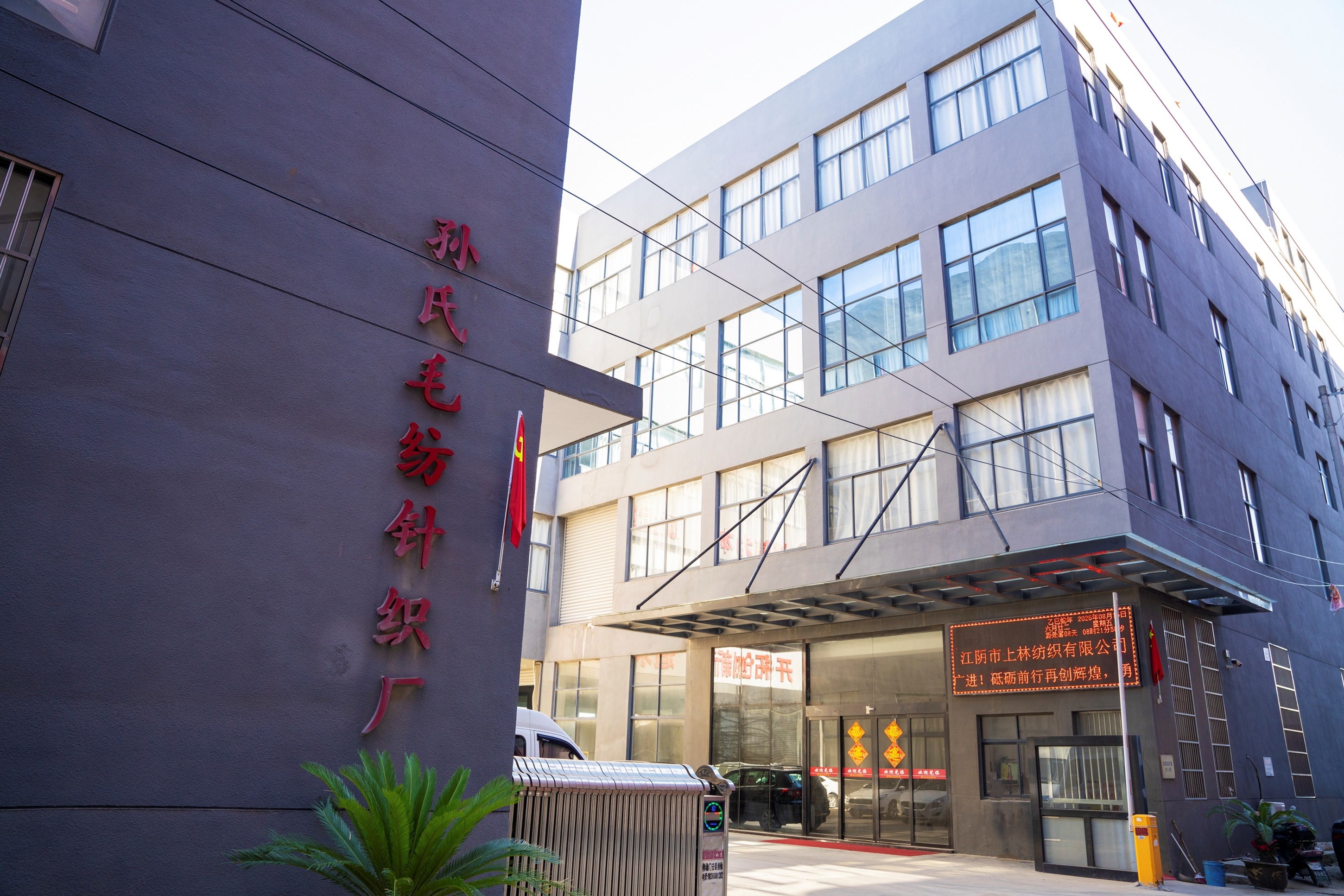
The Designer Collaboration Era: 2021-Present
The most recent chapter in the Jiangyin Shanglin Textile wool fabric history reflects a strategic evolution toward serving a broader spectrum of clients — not just established fashion brands with large order volumes, but also independent designers and emerging labels who value flexibility, prototyping support, and small-batch production capability.
This shift was driven by market dynamics. The global fashion industry has seen a proliferation of independent brands and direct-to-consumer labels, many of which require high-quality fabrics but cannot meet the large minimum order quantities demanded by traditional textile mills. Shanglin recognized this market gap and adapted its business model to serve these clients through flexible minimums, dedicated prototyping services, and personalized development support.
The Shanglin Textile growth milestones global brands narrative during this period includes numerous collaborations with niche designers who started with sample orders of 50-100 meters and grew into regular clients ordering thousands of meters per season as their brands gained market traction. This cultivation of emerging brands represents both a revenue strategy and a relationship strategy — the designers Shanglin supports today may become the major brand clients of tomorrow.
Product development during this period has focused on expanding the luxury fiber range and introducing innovative blends. The linen-mulberry silk category was launched to address spring/summer demand for natural-fiber lightweight fabrics. Wool-cotton blends with sequin embellishments were developed for fashion-forward women's wear applications. And the 100% merino wool line was expanded to include lightweight summer-weight constructions (180-185 GSM) that challenge the perception of wool as exclusively a winter fiber.
The Shanglin Textile two decades knitting expertise now encompasses a level of material knowledge that extends far beyond basic knitting mechanics. The company's R&D team understands how different fiber combinations behave during knitting, finishing, and garment construction — enabling them to advise clients on blend ratios, GSM selection, and finishing treatments that optimize fabric performance for specific garment applications.
Key Capabilities Built Over Two Decades
The cumulative result of nearly twenty years of continuous operation is a set of institutional capabilities that cannot be replicated by newer factories, regardless of how much equipment they purchase. These capabilities represent the true value of the Shanglin Textile two decades knitting expertise and explain why clients choose this factory over alternatives.
Multi-fiber blending proficiency. Working with wool, alpaca, mohair, cashmere, cotton, linen, silk, polyester, nylon, and lyocell — and combining them in various ratios to achieve specific performance and aesthetic targets — requires years of trial, error, and accumulated knowledge. Shanglin's engineers know, for example, that a 36% mohair blend requires different knitting tension than a 16% alpaca blend, and that adding 1% elastane to a wool-polyester blend fundamentally changes the fabric's recovery characteristics.
Pattern programming expertise. The computerized jacquard looms are powerful tools, but their output quality depends entirely on the skill of the programmer. Shanglin's team has developed a library of pattern templates and the expertise to modify them or create new ones based on designer sketches — translating creative concepts into machine-executable knitting instructions.
Supply chain relationships. Two decades of operation in Wuxi's textile ecosystem have given Shanglin deep relationships with yarn suppliers, dyeing houses, and logistics providers. These relationships translate into practical advantages: priority access to specialty yarns during peak demand, faster turnaround on outsourced dyeing and finishing, and more reliable shipping schedules.
Quality consistency across production runs. Perhaps the most important capability built over time is the ability to produce fabric that is consistent — not just within a single roll, but across multiple rolls, multiple production runs, and multiple seasons. Brand clients depend on this consistency; a fabric that varies in weight, color, or hand feel between orders creates production headaches at the garment factory and quality issues at retail. The Jiangyin Shanglin Textile wool fabric history of consistent quality is what generates repeat orders and long-term client retention.

Looking Forward: The Next Decade
As Shanglin Textile approaches its twentieth anniversary, the company's strategic focus is on three areas that will define its next phase of growth.
First, expanding the sustainable and traceable fiber offering. As global fashion brands face increasing pressure to document their supply chain sustainability, Shanglin is developing capabilities to source certified wool (including Responsible Wool Standard certification) and traceable luxury fibers, providing clients with the documentation they need for brand storytelling and regulatory compliance.
Second, deepening the custom development service. The Shanglin Textile growth milestones global brands strategy increasingly involves co-development partnerships where Shanglin works with brand design teams from the earliest concept stage, providing material recommendations and prototype fabrics that help brands differentiate their collections in competitive markets.
Third, investing in digital capabilities for client communication and order management. Streamlining the sampling process, providing real-time production updates, and maintaining digital fabric libraries that clients can browse remotely are all areas where Shanglin is enhancing its service infrastructure to meet the expectations of modern B2B buyers.